
Early access
LLM-driven choose-your-own-adventure
About the game
Exo's CYOA is an LLM-driven choose-your-own-adventure that adapts to you. You describe your next move, and the game responds with new narration. Guide a party through dangerous places, talk to characters, inspect the world, collect gear, craft solutions and make choices that reshape the narrative. Behind the chat flow, a structured simulation — locations, entities, items, quests — grounds every action and remembers what you did.
About the game
About the game
A party-based adventure shaped by your instructions
At its core, Exo's CYOA is about letting players approach a scenario the way they want to. You can move between locations, talk to people, inspect clues, rest, trade, craft, manipulate the environment, or escalate into combat and spells. The game interprets what you are trying to do, executes matching world actions, continues the story from the changed state, and stores everything into a memory system for future reference.
There is no script to stay on: your freeform instructions are interpreted into real world actions. Behind the chat flow, a structured simulation — locations, entities, items, quests — grounds every action and remembers what you did.
Two sides of the same adventure
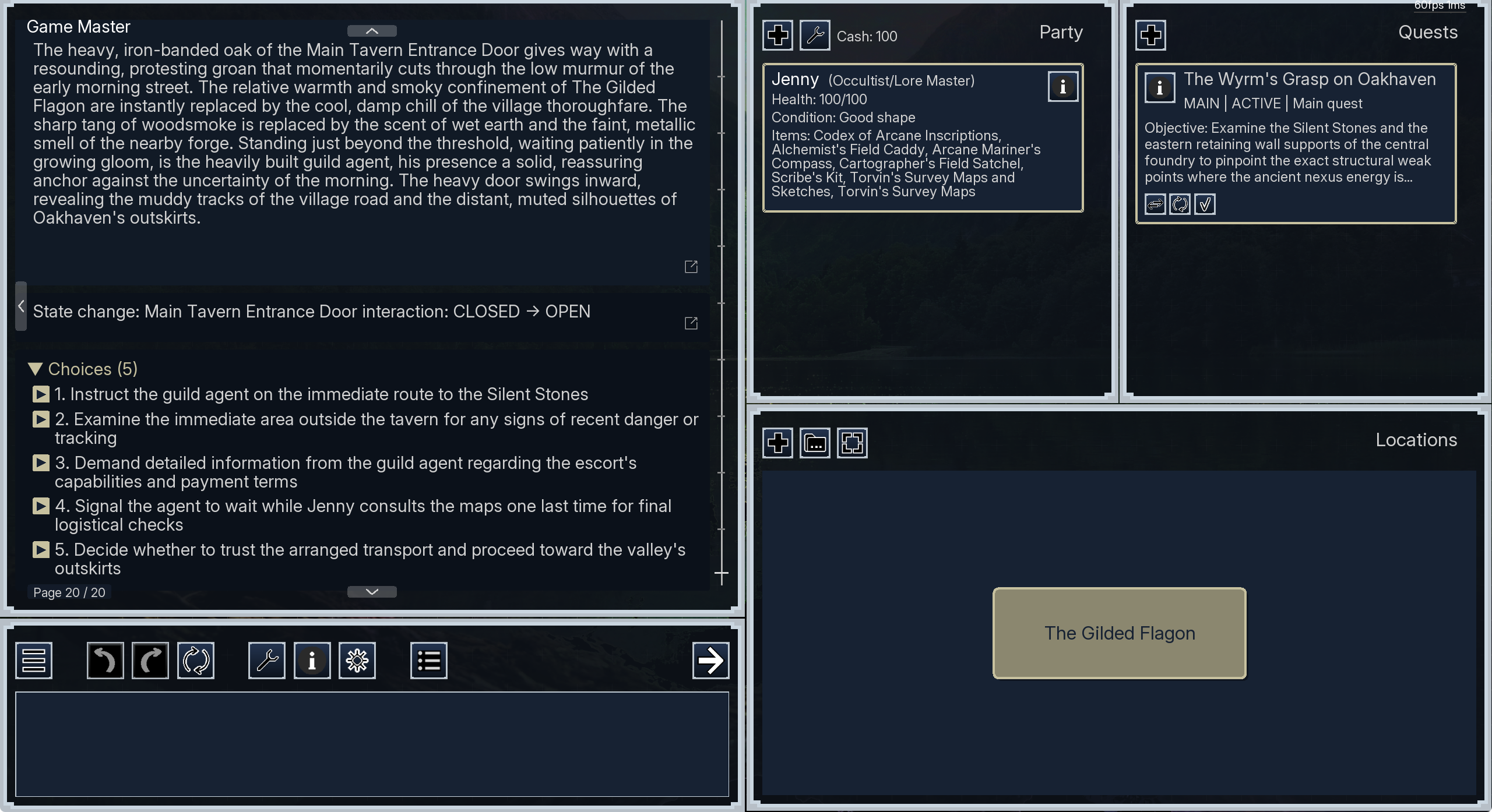
On the left side, the game is text-based: the story is narrated in prose, and you reply with plain instructions, just like a conversation with a game master. On the right side, the very same adventure is fully structured: locations, party members, inventory, quests, and world state are tracked as real data behind the scenes.
Both sides always show the same truth, and you can control and use them however you like. Stay purely in the narration and let the game handle the structures, or jump over to the structured side to inspect, adjust, and steer the world directly. Nothing is hidden from you, the story is an open book you can read from both covers.
Combat
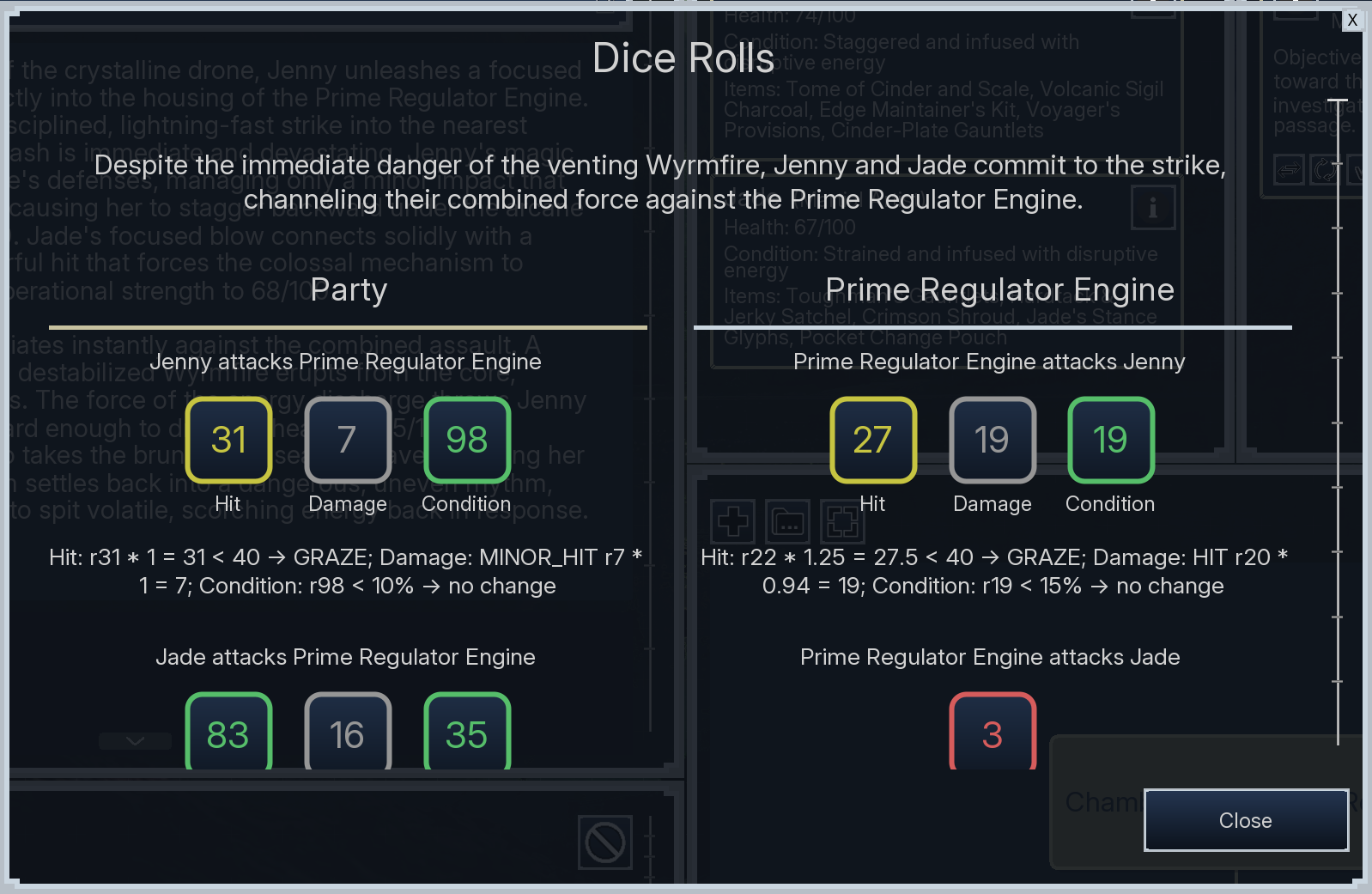
Escalation into violence is a first-class mechanic, not a coin flip in the dark. Your attack is assessed against the opponent's threat level, dice roll checks decide hits and misses, and every result updates health values and dynamic health-state descriptions. Difficulty settings tune the odds, a transparent dice dialog shows exactly how each roll played out, and the fight breakdown is woven into the narration. Injuries and conditions carry over into the story after the fight ends.
Chat assistants
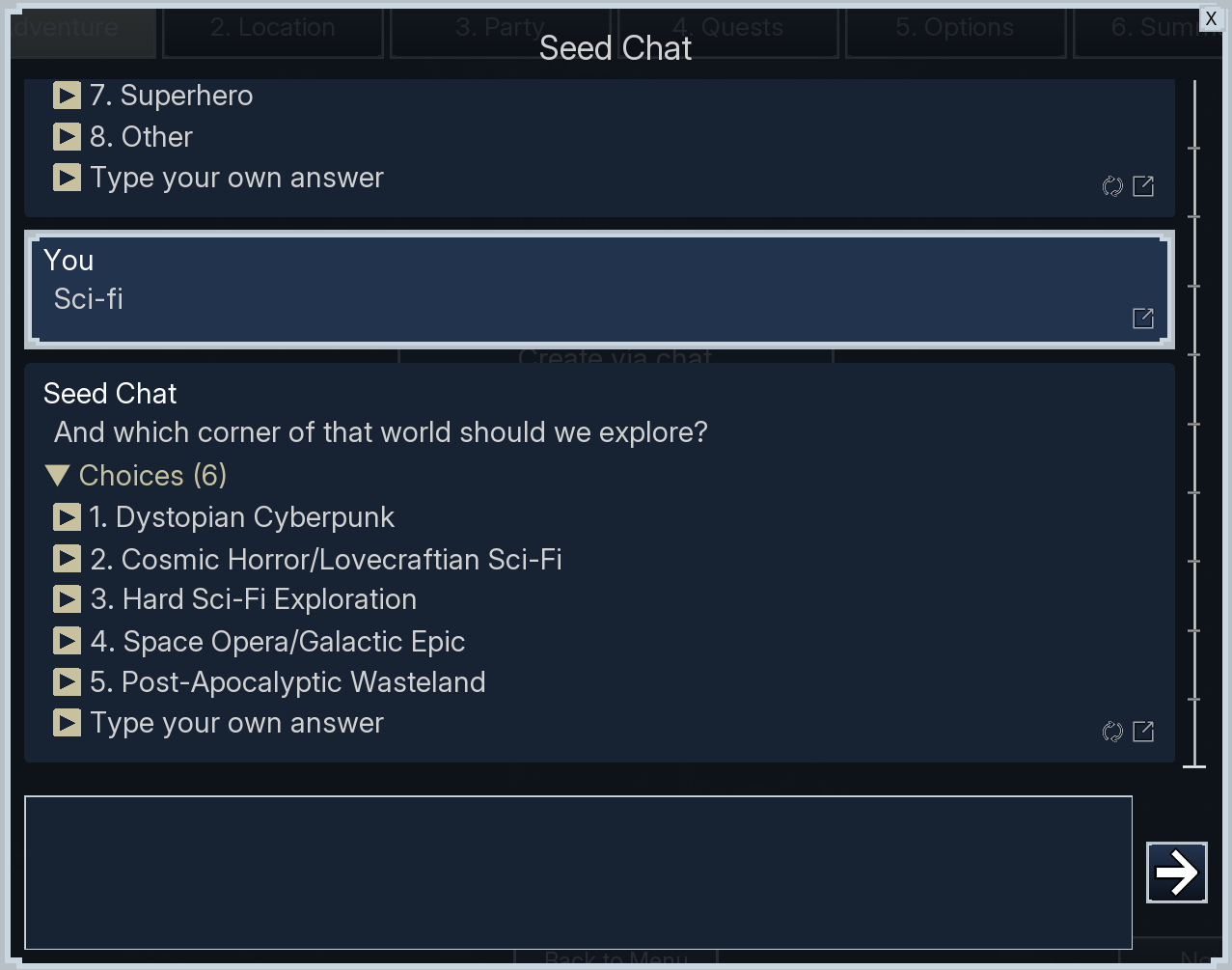
Guided, step-based chat assistants take the work out of content creation. Question, choice, proposal, and refinement steps walk you through setting up a new adventure, sketching quests, creating entities, designing locations, shaping party members, or filling a character's backpack with fitting gear. Each step streams live, any step can be retried or rephrased, and the finished result drops directly into the matching editor.
Flow actions
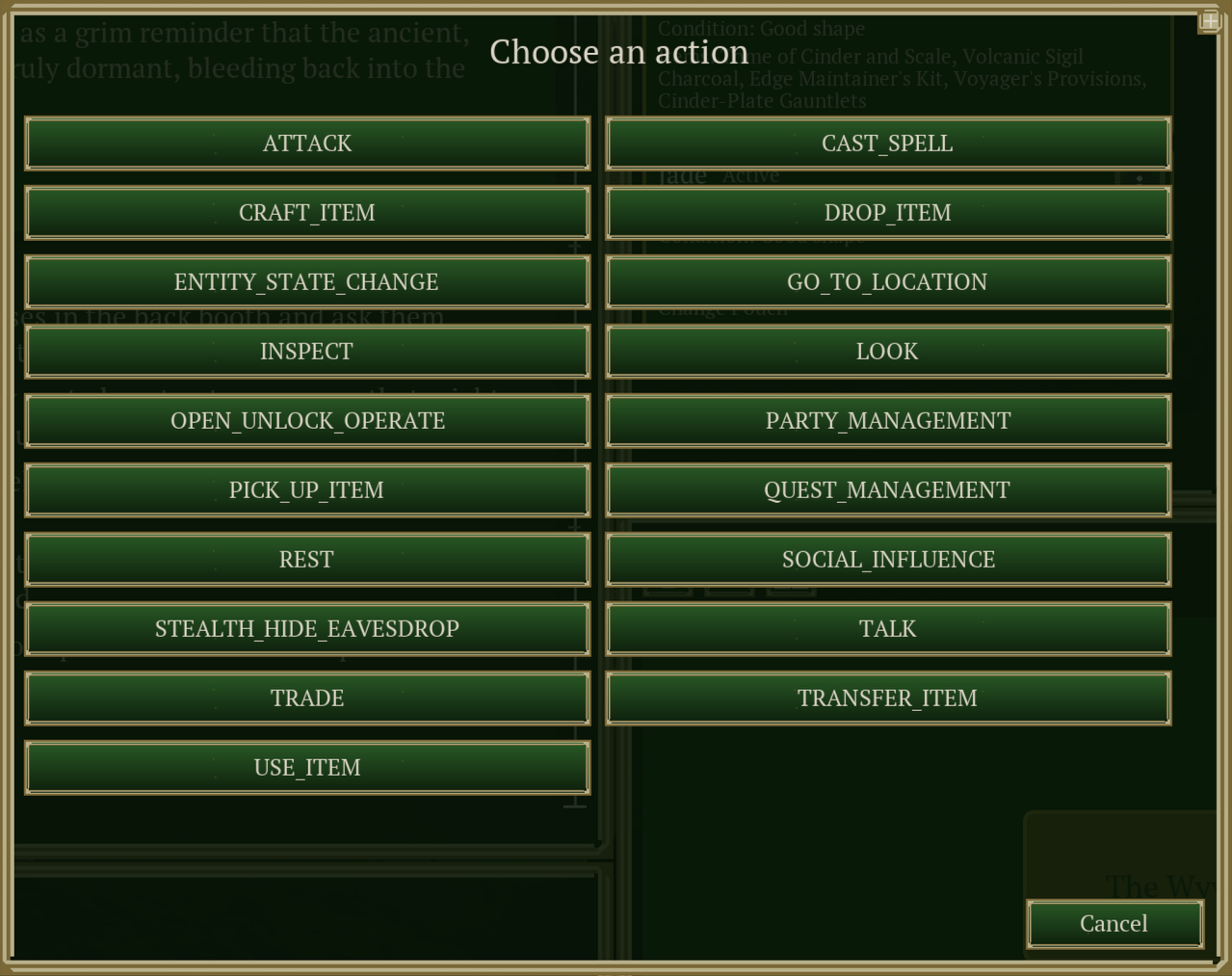
Your freeform instructions are automatically classified into structured actions: moving, attacking, talking, inspecting, trading, crafting, stealth, party management, and more. Multiple actions can chain in a single turn, so you can do things like sneaking, picking up an item, and immediately heading to another location. Alternatively, you can select an action from the menu (shown in the screenshot above).
Party management
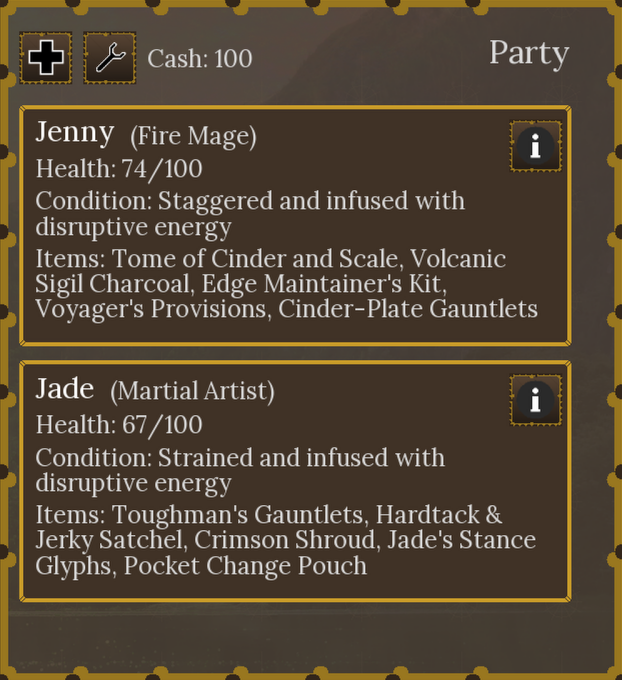
Run a party of characters, each with their own attributes, skills, appearance, health, dynamic health state descriptions, and personal backpack. Items can be picked up, dropped, used, and transferred between party members or traded with NPCs.
Quest system
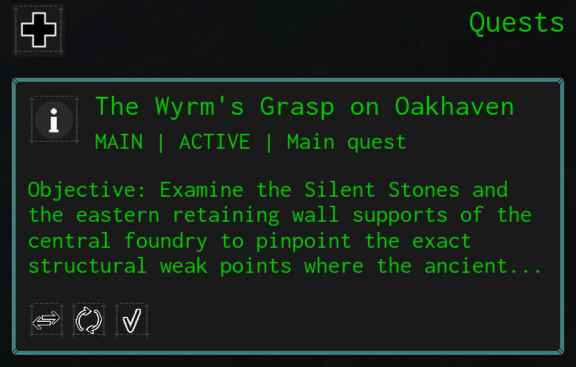
Main and side quests with ordered objectives and five lifecycle states: active, blocked, completed, failed, abandoned. Quest status changes are automatically tracked as the story unfolds.
Locations
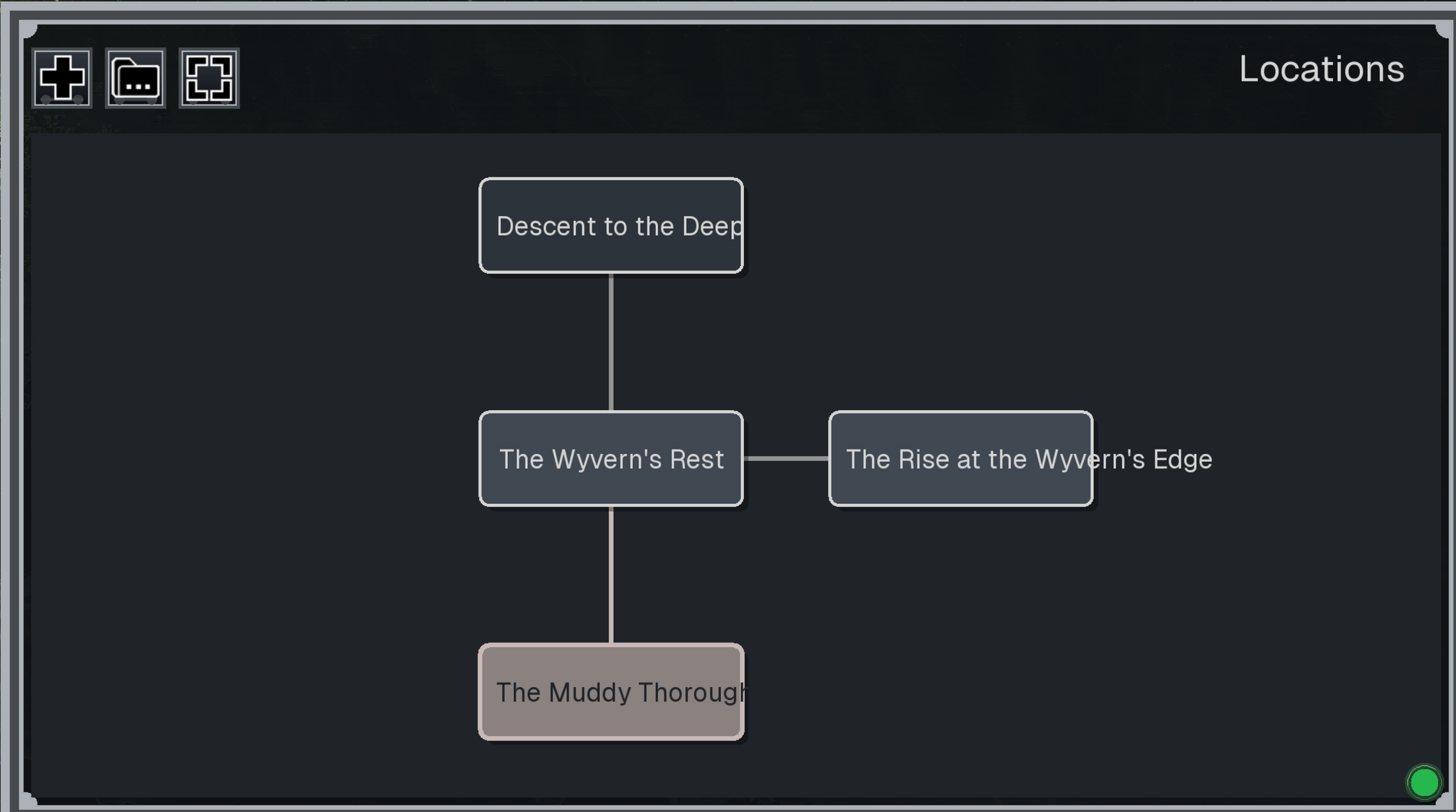
The world is a graph of interconnected locations with descriptions, ambient items, NPCs, and danger levels. Travel is governed by adjacency, you can only move where connections lead, and items and NPCs can carry over between visits.
Game Master
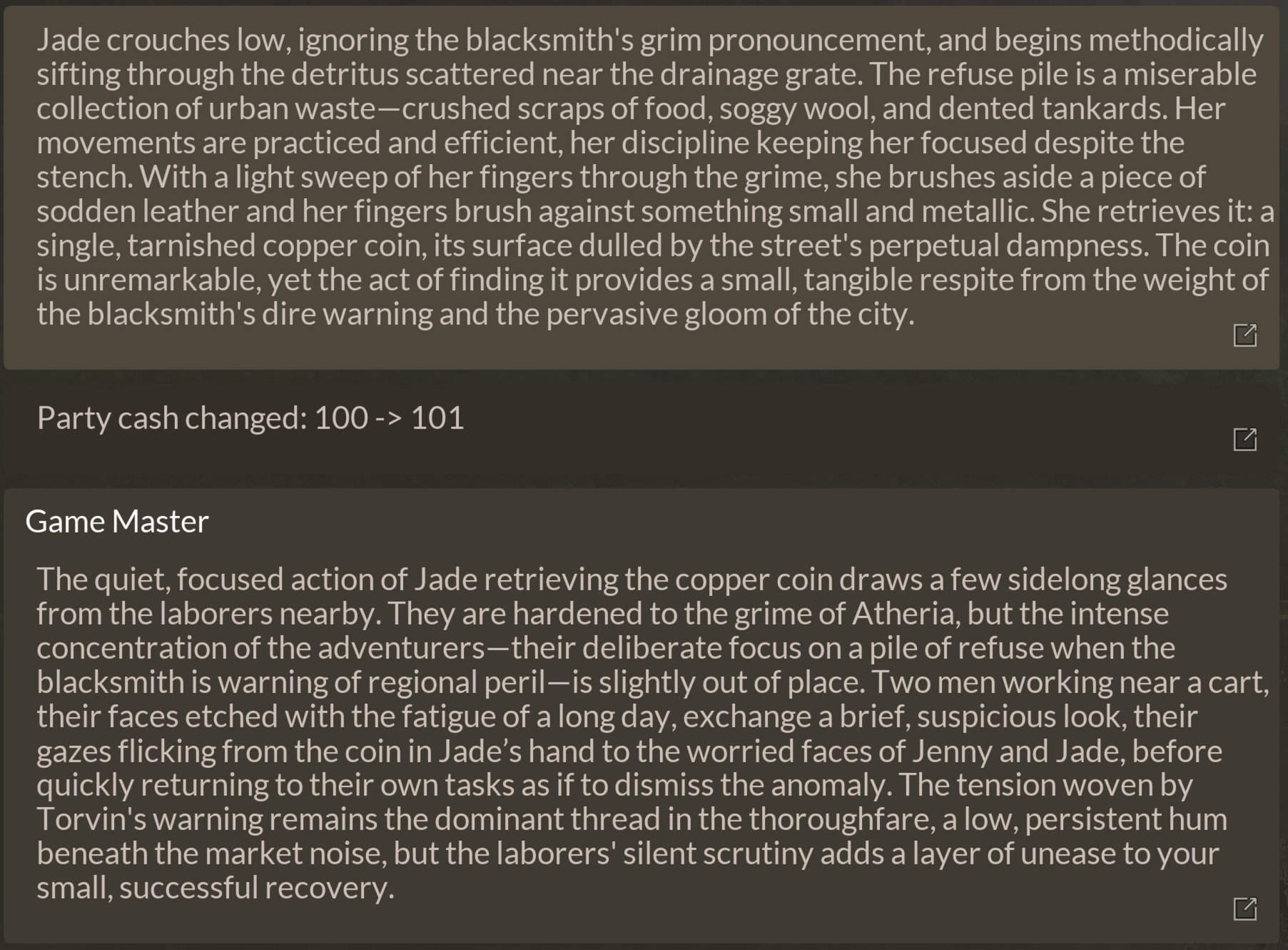
An autonomous LLM-driven game master runs after your turn to resolve world-side consequences: NPC reactions, pursuit, missed fallout, and quest developments. The GM can even take its own actions against the world. Toggle it on or off as you prefer.
Memory system
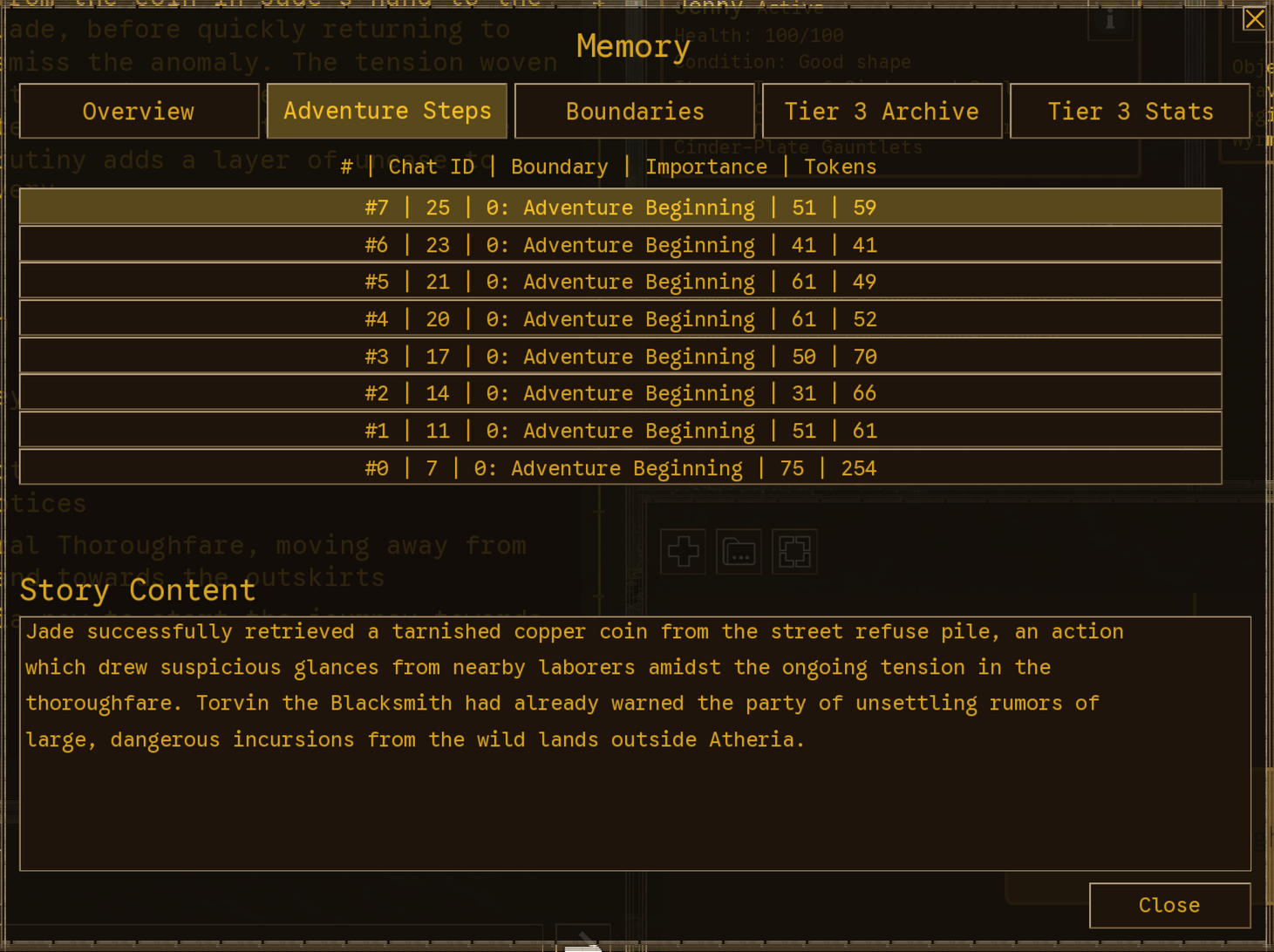
A three-tier memory architecture keeps the story coherent over long sessions. A sliding chat window provides immediate context, importance-filtered summaries preserve key events, and a tag-based archive organizes everything by location, character, item, quest, and more. The memory system uses LLM-based techniques to manage and recall information effectively. This is key to keep the required context length low, which requires less VRAM, improving performance, and reduces token cost.
Local LLM flexibility
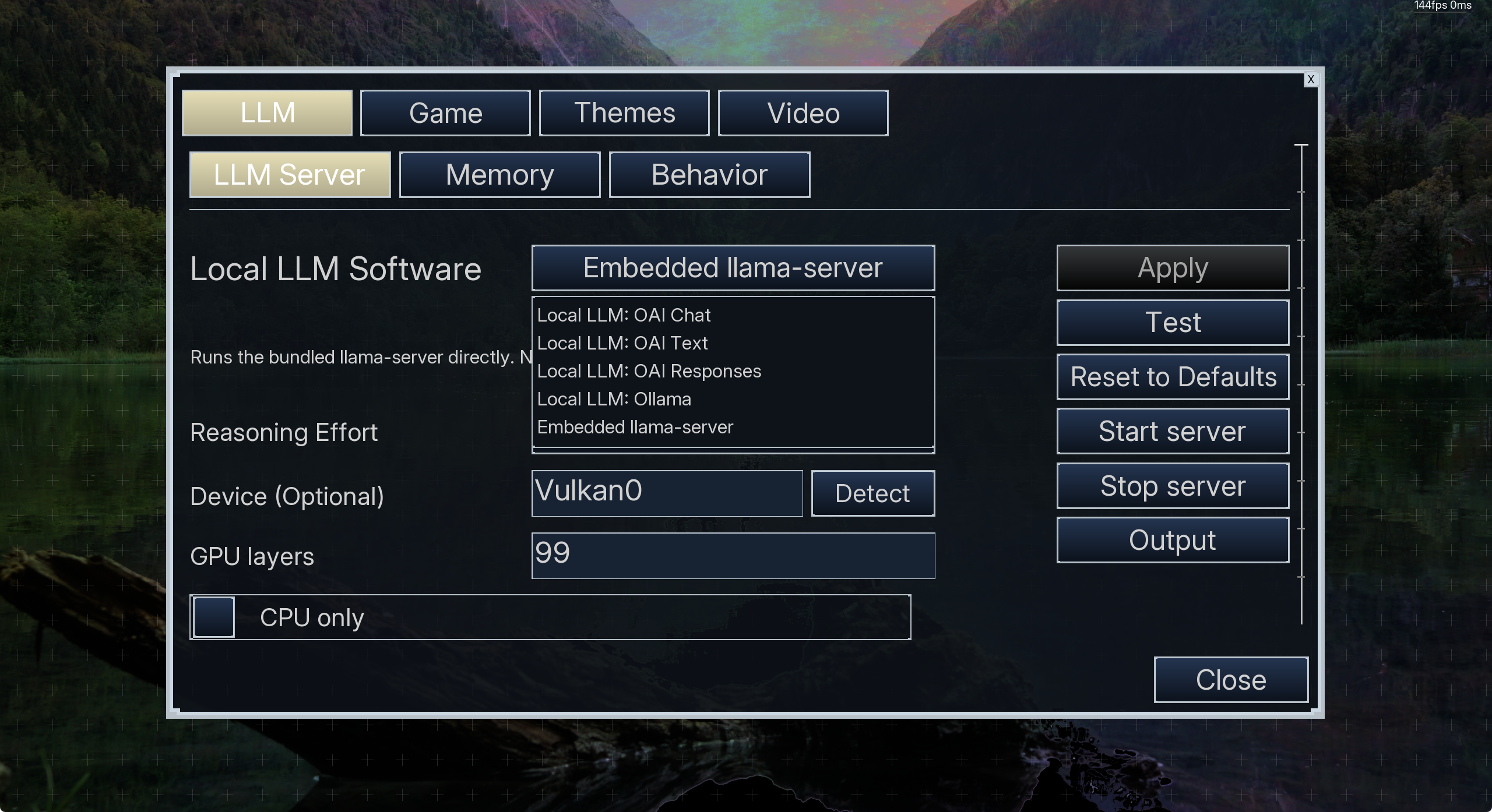
The game ships with an embedded LLM to handle natural language understanding and generation, enabling dynamic storytelling and responsive gameplay. It is designed for operation with models in the edge-device class. It can already run with a dedicated GPU with 8GB of VRAM (see System Requirements). Alternatively, you can connect your own local LLM software.
Six local runtime modes are supported out of the box: embedded llama-server for local inference, Ollama, OpenAI-compatible chat and text completion endpoints, OpenAI Responses-style endpoints, and the Anthropic Messages API for local software exposing it. These integration options work well with popular local LLM applications. Separate model profiles tune creative versus analytical agents independently.
Important: Cloud LLM providers are not supported. Exo's CYOA only connects to the bundled runtime or to local LLM software running on your own machine.
PDF export
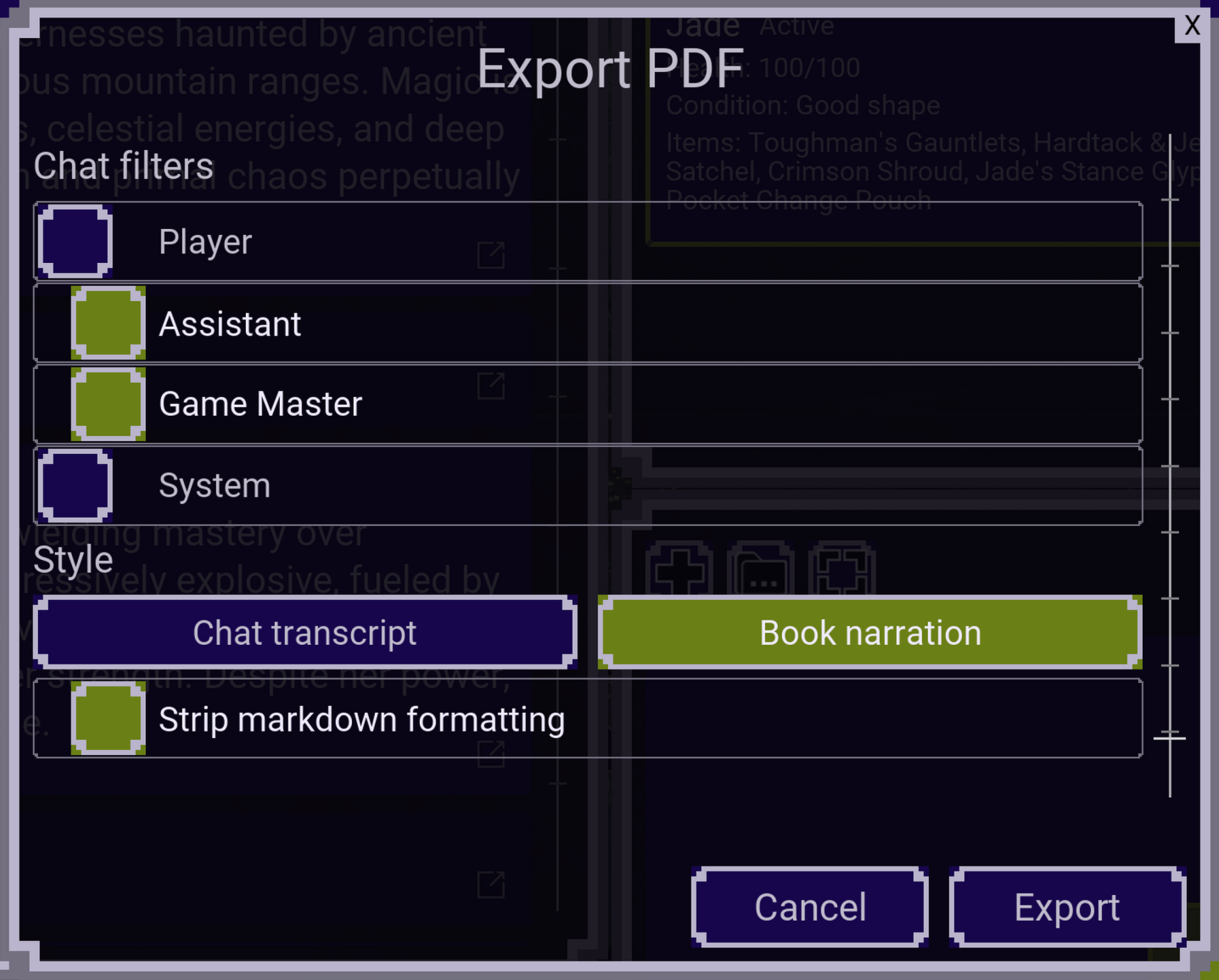
Export your adventure as a formatted PDF in two styles, a chat transcript with all message types, or a book-style narration with only the story text. Optionally include a table of contents, memory summaries, and visited locations.
Guardrails
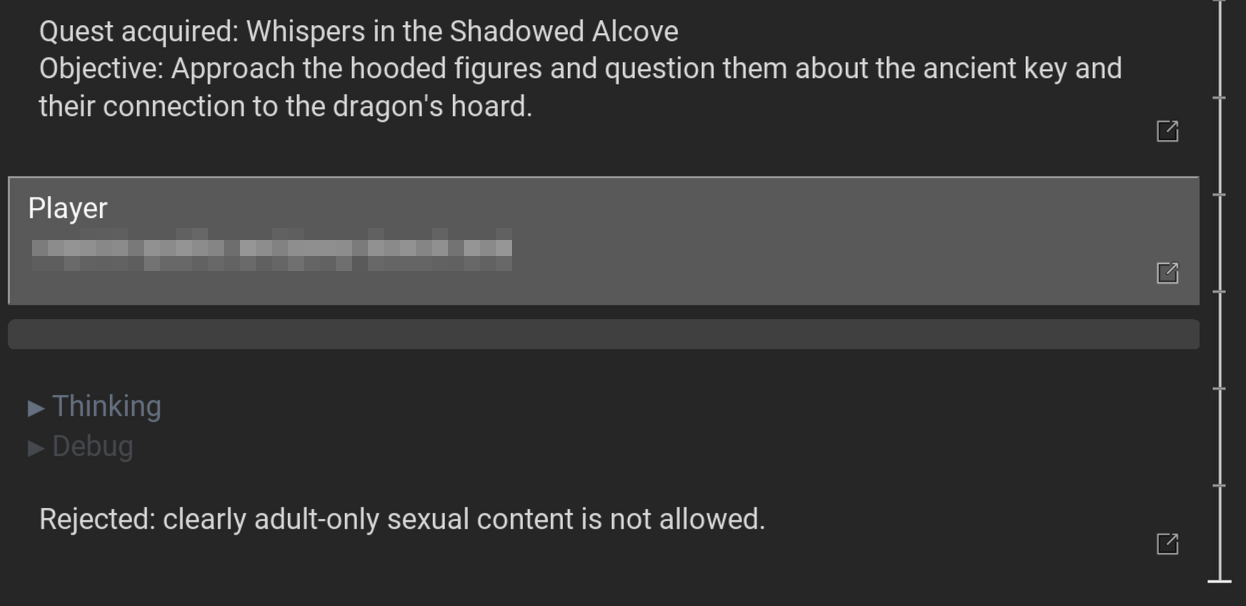
A content filtering system with eight categories, minor exploitation, hate speech, self-harm encouragement, realistic gore, graphic death detail, suicide depiction, illegal activity, and adult-only sexual content, applied at four layers: adventure setup, character creation, turn input gating, and narration output. The guardrails are designed to be protective without becoming broad moral censorship, allowing safe-for-work, romantic, fictional conflict, dark themes, and ordinary fantasy violence while blocking explicitly unsafe material.
Early Access
Exo's CYOA launched in early access on Steam. The game is already fully playable as a sandbox-style adventure, and the Early Access period focuses on making it deeper, smoother, and more consistent. Improvements may include better world reactivity, more detailed entity tracking, memory enhancements, and additional adventure styles beyond pure sandbox. The plan is roughly 12 months in Early Access, though timing depends on development and feedback. The Early Access price is lower and will increase moderately after the full release. Player feedback on the Steam Community boards will help shape what gets built next.